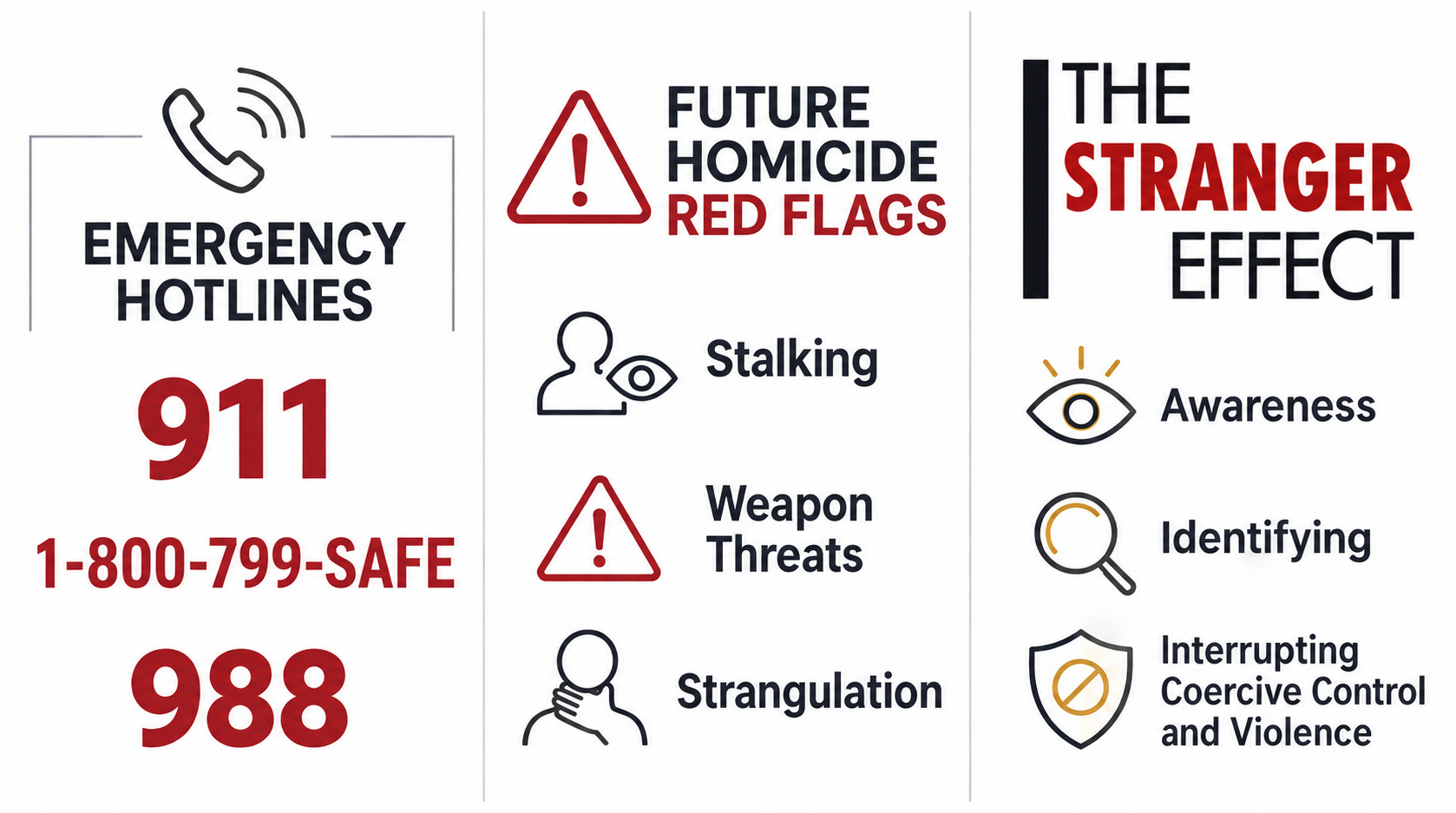
Beginnings are hard. Especially when the blank page in front of you represents a deeply personal reality. I did not start The Stranger Effect as a theoretical exercise; I built it because I have navigated the complexities of domestic violence firsthand. I have lived through the confusion of experiencing behaviors that society minimizes simply because of a relationship label, and I have seen the dangerous gap between the reality of abuse and how our systems respond to it.
This project was born from that lived experience. I realized that whether you are a victim trying to survive, an advocate stepping into someone’s life, a legal professional handling a case, or a stranger witnessing red flags in public, the greatest barrier to safety is the way we are conditioned to view familiar abuse. I had to learn how to mentally step back and assess the risk objectively to find clarity. Now, I am turning that personal survival mechanism into a practical tool for others. That is why this space exists, and that is why we are starting today.
Why this, why now
Imagine a stranger on the street screaming at you, monitoring your phone, isolating you from your friends, or physically blocking a doorway. We would immediately recognize this behavior as a severe threat. We would call for help. We would have zero tolerance for it.
Yet, the moment we attach an intimate or familial “relationship label” to the two people involved, society suddenly places that exact same behavior on a broad spectrum of “acceptable” or “understandable” conduct. We excuse it as a “bad argument,” “passion,” or a “private family matter.”
This societal conditioning is dangerous. It clouds judgment, delays intervention, and keeps victims trapped.
That is why I am launching The Stranger Effect. We urgently need a practical tool to bypass this conditioning. The premise is a simple but radical thought exercise in risk assessment: mentally strip away the relationship label. If a stranger did this, how would you react? By removing the familiar label, we can objectively evaluate the behavior for what it truly is.
What kind of community are you looking to build here
Domestic violence does not happen in a vacuum—it impacts an entire ecosystem. Because of that, this publication is not just a blog; it is an advocacy hub built for four distinct groups:
Victims & Survivors: A space for validation, recognizing non-physical abuse, and actionable safety planning.
Legal Professionals: Insights that bridge the critical gap between clinical trauma and court procedures, protective orders, and evidence dynamics.
Victim Advocates: Resources for managing frontline fatigue, sharing best practices, and navigating community resources.
Bystanders & Strangers: Practical guides on how everyday people can spot the red flags of coercive control and safely intervene without escalating a dangerous situation.
What to expect.
To make this information as accessible and actionable as possible, here is what you can expect when you subscribe:
Weekly Insights: Every week, I will publish a new article breaking down a specific aspect of abuse, intervention, or legal reality.
Categorized Content: Every post will be clearly tagged for its intended audience (Victims, Advocates, Legal, or Strangers) so you can immediately find the resources that apply to your situation.
Always Free: Safety and risk assessment should never be paywalled. All core articles, tools, and visual resources will remain 100% free for everyone. (Optional: If you wish to support the ongoing creation of these resources, a paid subscription tier is available, but never required).
The First Step.
Awareness starts with shifting our perspective. If you are ready to look through a clearer lens and stop excusing the inexcusable, join the community below.
Please share this with your colleagues, friends, and anyone who might need a new way to assess the risk in front of them.